
Nullam dignissim, ante scelerisque the is euismod fermentum odio sem semper the is erat, a feugiat leo urna eget eros. Duis Aenean a imperdiet risus.

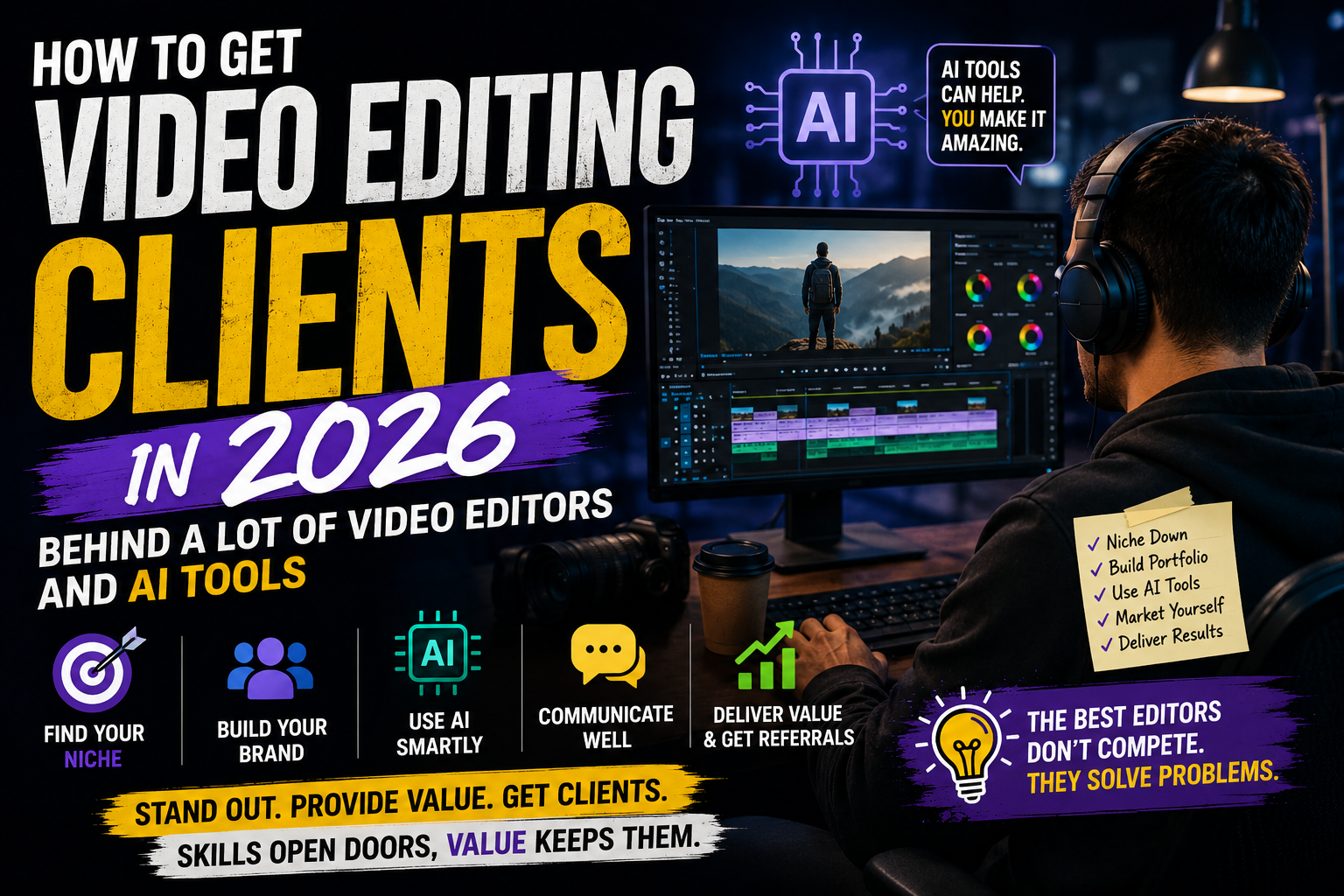
How to Get Video Editing Clients in 2026 (Even with Thousands of Editors and AI Tools)
The video editing industry has never been more competitive.
Every day, thousands of new editors join platforms like Upwork, Fiverr, and social media. At the same time, AI tools can now create captions, remove pauses, generate B-roll, color grade footage, and even edit short-form videos in minutes.
If you’re wondering whether it’s still possible to build a successful video editing career in 2026, the answer is yes—but not by using the same strategies everyone else is using.
Clients aren’t simply looking for someone who knows how to cut clips anymore. They’re looking for someone who can solve problems, save time, and help grow their business.
Here’s how you can stand out.
1. Stop Selling “Video Editing”
One of the biggest mistakes editors make is advertising themselves like this:
“I’m a professional video editor.”
Unfortunately, thousands of other editors say the exact same thing.
Instead, sell the outcome.
For example:
- I help YouTubers increase viewer retention.
- I edit videos that convert viewers into customers.
- I create engaging TikTok videos that keep people watching.
- I help businesses produce professional content consistently.
Clients don’t buy editing.
They buy results.
2. Choose a Specific Niche
Generalists often struggle because they compete with everyone.
Instead, specialize.
Examples include:
- YouTube Documentary Videos
- Podcast Editing
- Real Estate Videos
- E-commerce Product Ads
- UGC Content
- Wedding Films
- Corporate Videos
- Fitness Content
- Online Course Videos
- Short-Form Reels
When clients see that you’ve edited their type of content before, you’re much more likely to earn their trust.
3. Build a Portfolio That Solves Problems
Instead of uploading random edits, organize your portfolio into categories.
Show examples like:
- Before vs. After
- Improved pacing
- Better audio
- Motion graphics
- Color correction
- Retention-focused editing
Explain why you made certain editing decisions.
Clients want confidence that you understand their goals—not just the software.
4. Learn AI Instead of Fighting It
Many editors worry that AI will replace them.
The reality is that clients are increasingly looking for editors who know how to use AI efficiently.
Use AI to:
- Remove silence automatically
- Generate captions
- Organize footage
- Create transcripts
- Improve audio
- Suggest B-roll
- Speed up repetitive tasks
AI doesn’t eliminate the need for human creativity, storytelling, and judgment. It changes how the work gets done.
Editors who combine creativity with AI often finish projects faster and can take on more work.
5. Build Your Personal Brand
Many successful editors no longer rely only on freelance platforms.
Instead, they attract clients through content.
Share:
- Editing tips
- Before-and-after transformations
- Behind-the-scenes workflows
- Premiere Pro shortcuts
- Client success stories
- Time-lapse editing sessions
People hire editors they already know and trust.
You don’t need millions of followers. Consistently sharing valuable content can be enough to generate inquiries.
6. Reach Out to Potential Clients
Waiting for clients to find you can be slow.
Research creators or businesses whose videos could be improved.
Send a short, personalized message.
Mention something specific you liked about their content, explain one improvement you noticed, and offer to help.
Avoid generic copy-and-paste pitches.
A thoughtful message stands out.
7. Focus on Communication
Technical skill alone won’t keep clients coming back.
Professional communication matters.
Respond promptly, ask clear questions, meet deadlines, and keep clients updated on progress.
Reliability is one of the biggest reasons clients become repeat customers.
8. Keep Learning
Editing trends evolve quickly.
Spend time improving skills in:
- Storytelling
- Sound design
- Motion graphics
- Color grading
- Marketing
- Copywriting
- Thumbnail design
The broader your skill set, the more value you can provide.
9. Ask Happy Clients for Referrals
One satisfied client can lead to many more.
After completing a successful project, ask whether they know anyone else who might need editing services.
Word-of-mouth referrals often lead to higher-quality clients because trust already exists.
10. Think Like a Business Owner
Freelancers who succeed long-term don’t just edit videos.
They build systems.
Track leads, follow up with prospects, improve your portfolio regularly, and create a consistent process for onboarding clients.
Treat your editing career like a business, and you’ll make decisions that support long-term growth rather than chasing one project at a time.
Final Thoughts
AI is changing the video editing industry, but it hasn’t eliminated the need for skilled editors.
Clients still need someone who understands storytelling, pacing, branding, and audience engagement.
The editors who thrive in 2026 won’t necessarily be the fastest or the cheapest. They’ll be the ones who communicate well, specialize in a niche, embrace new tools, and consistently deliver value.
Instead of competing with AI, learn to work alongside it. Instead of competing with every editor, position yourself as the best solution for a specific type of client.
That’s how you build a sustainable video editing business—even in a crowded market.